The Sound of Rain on Dust; Sonic landscapes with Milan Ring
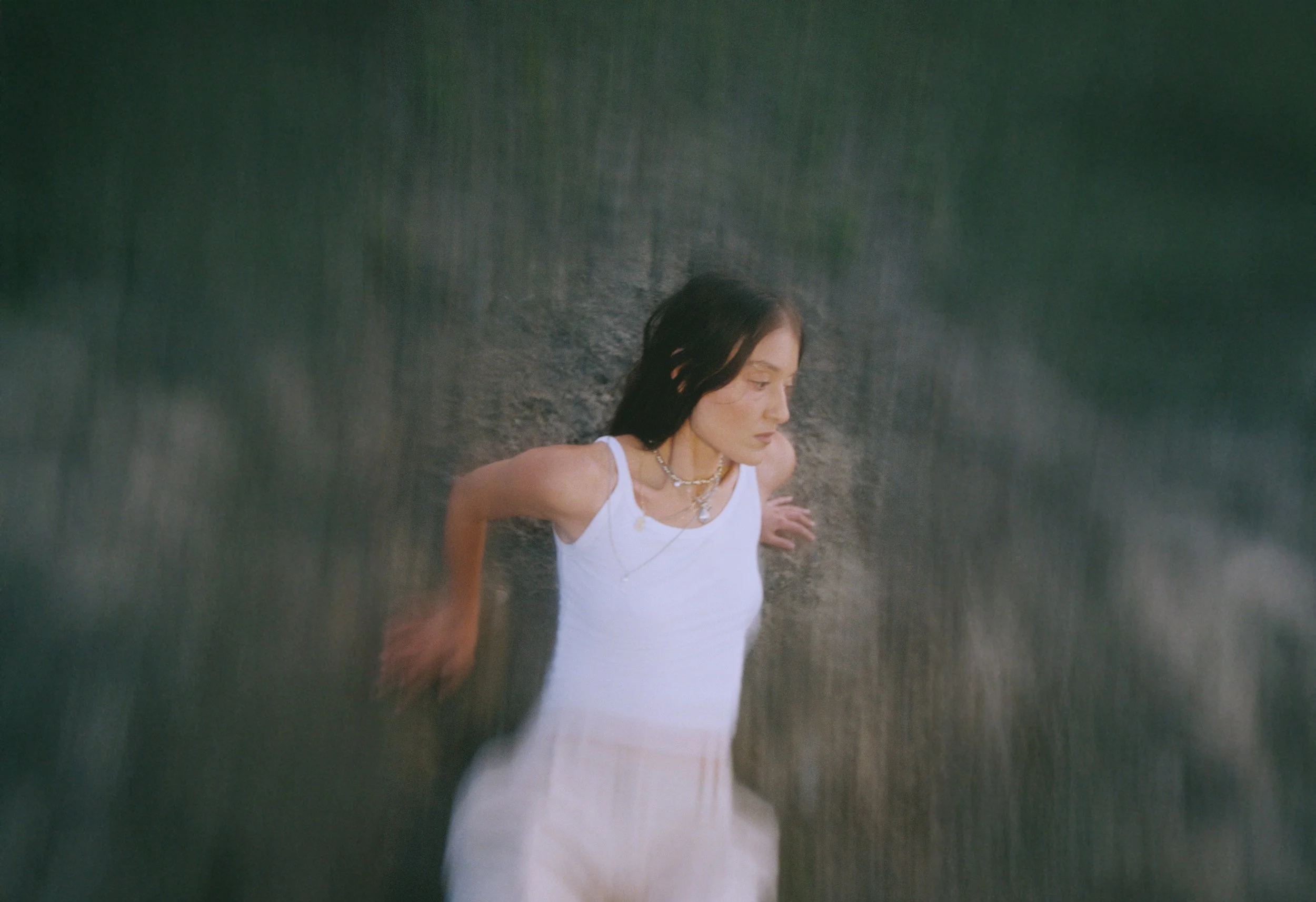
Milan Ring is an accomplished musician, songwriter, producer, engineer and musical director who has recently taken up residency in Berlin to expand her genre-defying sound into new territories. Exposed to the experimental and unknown amongst Berlin's offerings of spatial sound, her newfound obsession with sonic meditations and deep listening experiences have led her to create an immersive sound bath that lingers in the moments between grief and release – like the first drops of rain, the tension before transformation.
Interviewees: Milan Ring (she/her)
Interviewer: Joella Marcus (she/her)
With a decade-long music trajectory, and an expansive catalogue, her sonic innovation harmonises her technical expertise and creative autonomy. For her Sydney Festival performance The Sound of Rain on Dust, Australian R&B innovator Milan Ring transforms The Neilson into an intimate lie-down sonic experience, blending voice, guitar, electronics and Australian field recordings to explore the liminal space between grief and release. Known for her 2024 album Mangoes, laden in raw emotion and candid storytelling, her new piece is a carefully orchestrated departure further into her tender transportive sets.
JOELLA MARCUS How are you doing? Are you back in Sydney?
MILAN RING I came back for Christmas.
JM How did it feel to return from Berlin?
MR I came back for Vivid 2025 in May. I was only here for four weeks and it was quite intense because I had a bit of work to do. This time I gave myself some time.
JM Of course. Especially as it seems it's going to be quite a vulnerable performance.
You’re a powerful one-woman show, who over the last decade has displayed an impressive catalogue of works and collaborations. In presenting your new piece ‘Sound of Rain on Dust’, you continue to push the boundaries of your sound. What spurred this next evolution? Especially amongst unknown paths?
MR It's an interesting question because I'm on the path. I felt pulled into it naturally. Obviously a lot of inspiration comes from having moved to Berlin and exploring more sound art, spatial audio, immersive audio and a lot of venues. It was quite liberating. I was quite obsessed with it. It's stuff that I've naturally nodded towards sound design wise, even earlier on, but never really knew there was an avenue to explore it. This year I was approached by people in film and for the Samsung ‘Space to Dream’ sound design. I didn't seek that out, it felt that at the same time as me exploring these things more deeply, stuff was also thrown my way. Similarly being able to put this show on, we had started discussing what I would want to do show wise in Sydney last time and I thought it would be cool to do something like this.
JM A natural progression. It is hard to be retrospective when you’re still going down that path. In a previous interview you mention performances begin with pen and paper and visualising flow. With this being a different kind of performance, was that method of development the same?
MR Where did I start? Honestly... before the pen hit the paper I was sitting there really really sitting with my feelings…feeling my emotions, using memory, thinking about sounds and really listening deeply, even just going for walks and listening to the street around me. It made me think about how one of the things I was missing the most about Sydney was the sound; the sound of the birds, cicadas and everything. It sounds so different. The beauty in the mundane; the Marrickville Minute and the planes going over. Actually, I don't miss that.
JM The piece seems to harbour a lot of vulnerability as you're talking about returning home, the release of grief and also inviting the audience to lie down, which in itself is a very vulnerable position. Did it feel quite hard to tap into the vulnerability in the initial stages?
MR No. It's more the final stages that are harder. The reason I make music is to be vulnerable and to process what I'm going through, so I just started making but now that the performance is closer the vulnerability is…I'm already there on the journey, so I'm gonna do it.
JM Your piece for the Sydney Festival plays against a backdrop of the ACO Pier which is different from those on which it was recorded and produced, creating a layered and dually immersive experience. What does this sound at the crossroads of place offer listeners?
MR In terms of the field recordings, I've been doing them since I've been back in Sydney. The last week of storms have been amazing. Musically, composition wise and production wise, I have made the majority of it in Berlin.
I'm constantly at the crossroads of multiple things. I'm constantly blending this and that. I'm always trying to be sitting at the crux but sometimes I ask why? I love the multiplicity, I like the balance. We all hold a lot of things, maybe that's even being multi-cultural, coming from lots of different backgrounds and growing up in Sydney, so-called Australia. There's so much we're all holding, so many multiplicities and it’s something I'm constantly exploring. Being comfortable to sit in the grey space or the transitional areas of life, which do feel often uncomfortable, or stepping into something new as you were asking me earlier. Sitting with the uncomfortability of letting go of something like grief, which the show is very much about, or sitting with a bit of silence for a while. Why am I rushing to the next thing now? Breaking out of those formats of the more traditional pop structures that I've often been in and playing around with it to move outside of that.
JM Did you find it easier to facilitate because you were stepping outside of Sydney and in Berlin to then have this distance from or overarching view of your home? Was it easier to develop your sound outside of the space which it's about?
MR Yes. I've traveled a lot but spending this much time outside of Sydney, having really made a committed move, there is an interesting shift and way of looking back at home and memory. That has been an impact and exposure is always important. I've been exposed to a lot of different things in Berlin as there is a lot of pushing boundaries and manipulating structures. It’s definitely unlocked something for me; just do what you want to do. It sounds so simple. Going to things that are disruptive or make you feel a little uncomfortable or where they don't go to where you expect, that already shifts something in you to free you up…well it has for me.
JM The Smell of Rain on Dust by Martin Prechtel: What was your interpretation?
MR I want to be careful here because it's one of the influences but it didn't fully inspire the piece. I hope it's okay that the name is very similar. I was writing about a lot of environmental destruction, reading some books and looking to indigenous voices. I came across The Smell of Rain on Dust by Martin Prechtel. It's hard to isolate a book but one of the stronger elements, that I took away, was sitting in the uncomfortable feeling of transition and how the ultimate transition is right when someone passes to…well, we don't know. Our transition of having to let someone go, even if they haven't died as there's grief in many forms, but to not bury that grief and ignore it but to really express it and feel it. One of the things he says is that the more and more we suppress grief it becomes ancestral ghosts that haunt the next generations. It's a heavy and beautiful concept and it resonates with me in terms of the sickness that can happen. That's something a lot of Western cultures have done where we push it away but it's going somewhere. That concept really resonated with me and what I was already feeling and writing about musically. When it got to the point of picking, I knew I wanted to add some field recordings of the sounds of Australia because I was missing the sound. When I had to pick a name for the show ‘The Sound of Rain on Dust’, it sounded like Australia too, even though he was not writing about that.
JM There is a quote from the book “best to grieve when it's time, to save the world a lot of war and trouble.” Did the timing of this piece feel like a poignant reminder?
MR For sure. I'm a human in this world and I'm feeling it all.
JM Everything we make and do is in some way an archive.
MR Yes because of what I have felt, and how certain deep listening spatial audios have moved something in me – I've laid down, I've closed my eyes and I have cried. These experiences have allowed me space to feel and listen which I don't think we allow ourselves to do very often. I know that I don't always. I want to do this and I want to be part of this because I think the process of me making the performance will hopefully allow others to feel like I did. It's not for everyone and you have to be open because there are moments when I want to leave the room as there's something uncomfortable about it.
JM Is there any particular instrumentation you’ve used to explore grieving as an art form?
MR The voice. I've got a few new gadgets for my guitar and I’ve started using the Avalanche Run pedal which has endless delays and huge reverb. I planned to start the show there because it sounds like this wailing crying guitar off in the fog somewhere. When I first started using this pedal that was such a particular visual for me of the feeling like there's something, or a feeling, really far in the distance but I'm not looking at it or I don't remember it properly or I'm ignoring it but then it's coming closer and closer. That's where I wanted to start because as the guitar comes closer and as the reverb disappears we're faced with the music. That's what life does, especially if we've been pushing away something that we don't want to face yet and that's how it felt for me.
JM Thank you.
Sydney Festival marks its 50th anniversary in January 2026 with a diverse city-wide program that honours five decades of cultural transformation and looks ahead to the next generation of artistic innovation. With a city-wide invitation to gather, play, reflect and imagine together, until Sunday 25 January, the festival transforms Sydney into a living stage, activating theatres, streets, alleys, parks and unexpected spaces with bold theatre, dance, music, visual art and immersive experiences that honour five decades of cultural transformation while looking firmly to the future.
Written and Interviewed by Joella Marcus (she/her)
Interviewee Milan RIng (she/her)
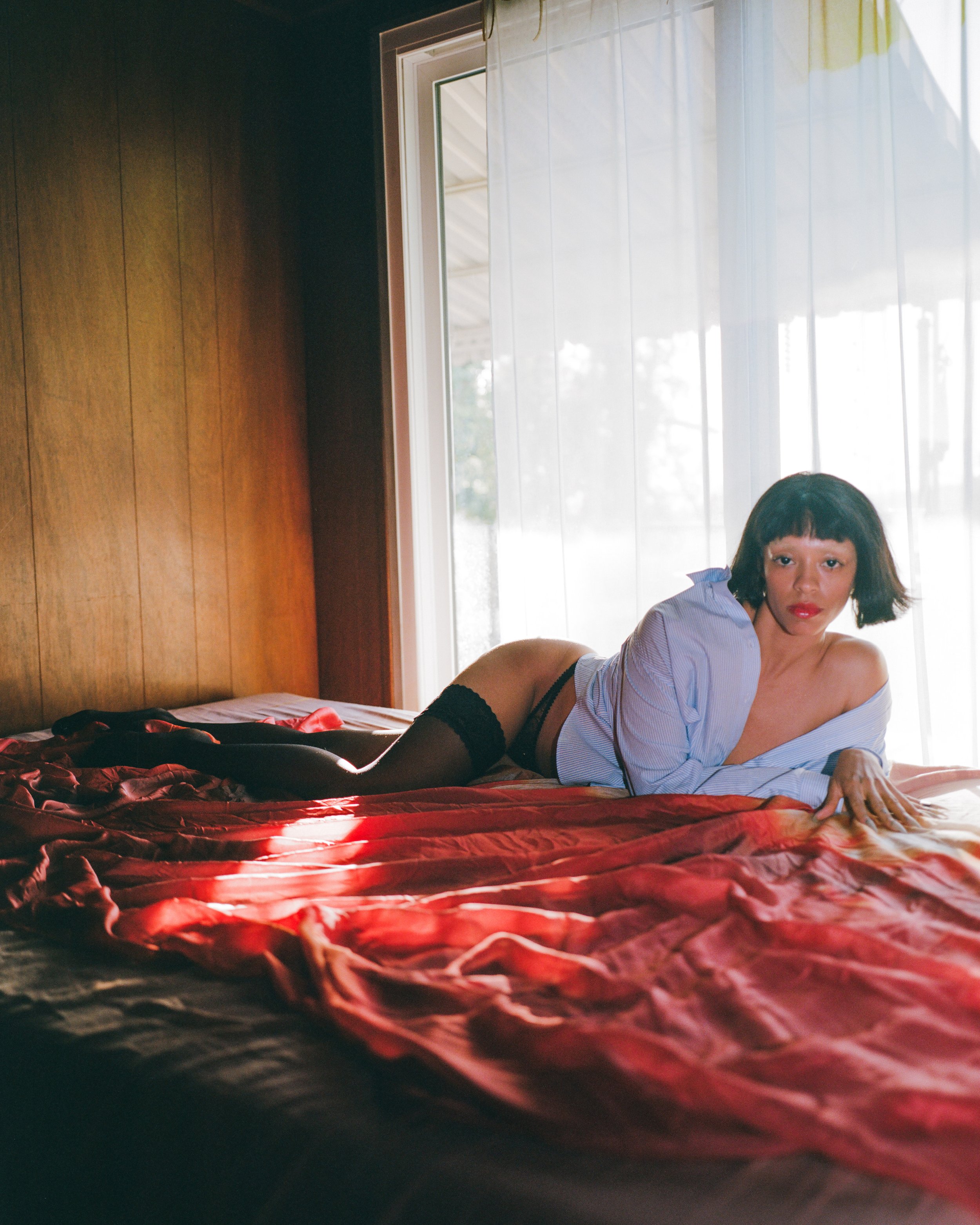
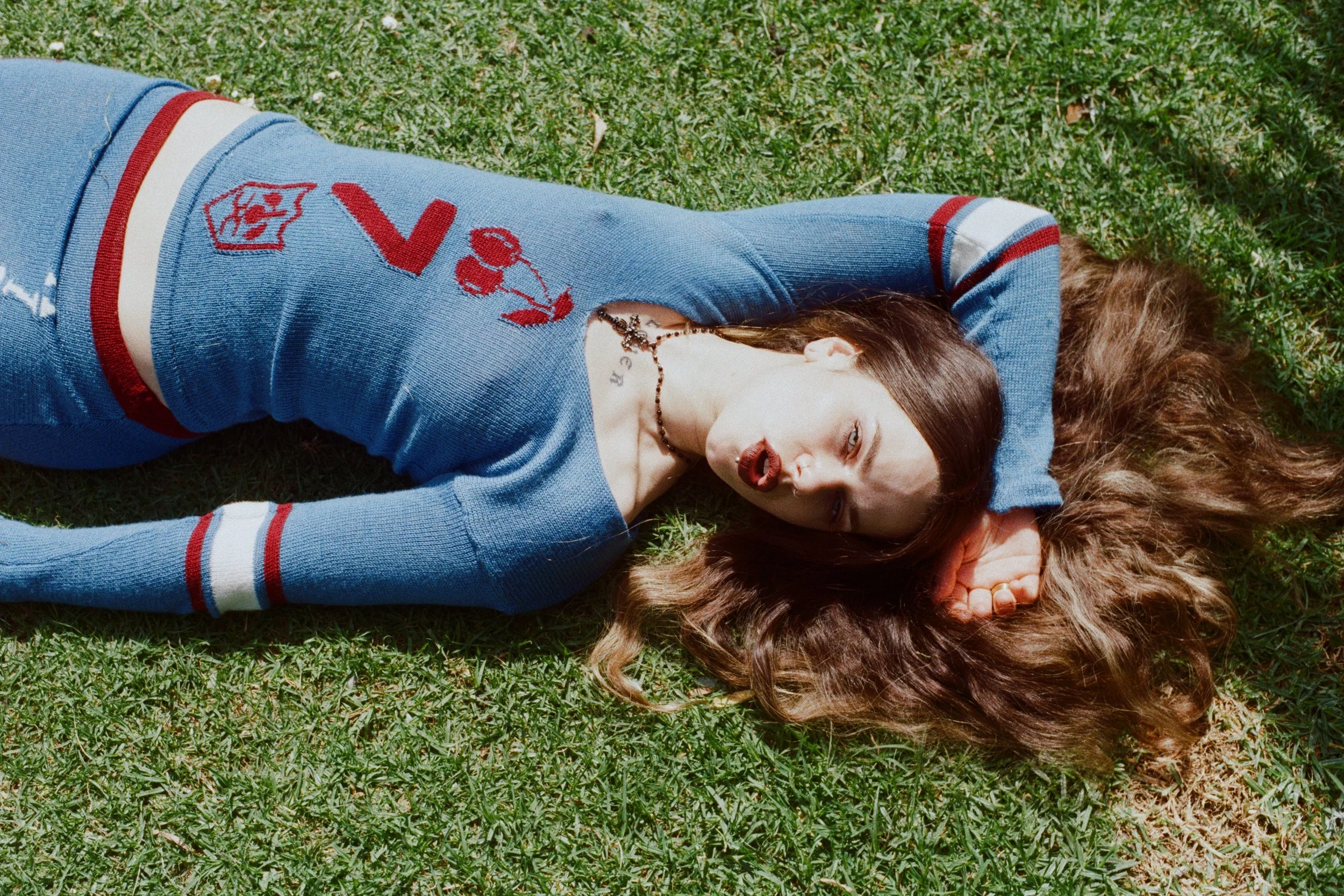
Photography by Rahma Mohamed
MORE LIKE THIS