Tomatophagia
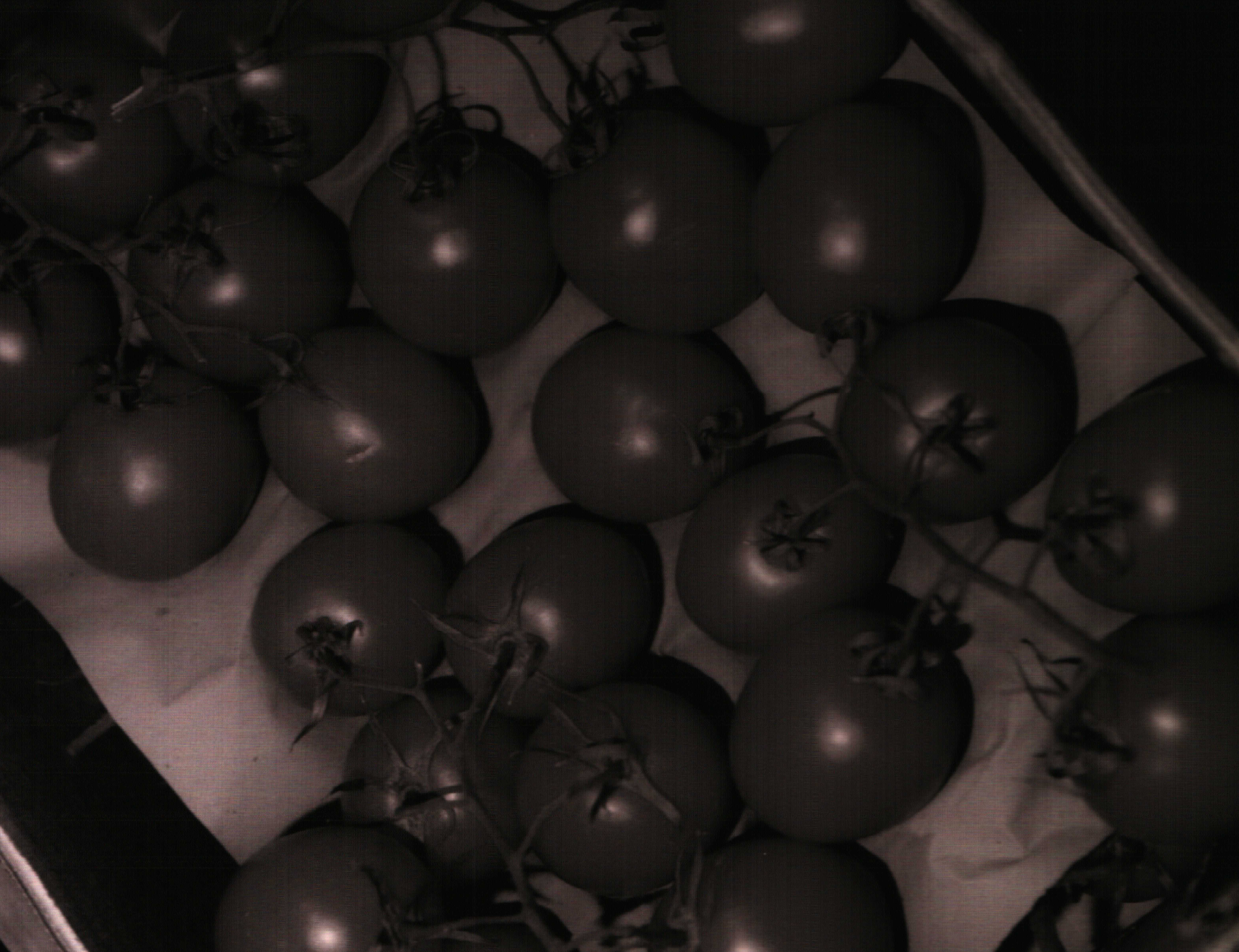
I’ve been craving tomatoes lately. The internet says that an insatiable craving for tomatoes or tomato based products is known as tomatophagia.
Tomatophagia may sometimes be associated with nutritional deficiencies, especially in pregnant women. It may also occur in people with iron deficiency anemia, even though raw tomatoes are low in iron.
I know I am not low in iron. I just had a whole blood panel done.
And I know I’m not pregnant.
The pain has started up again, a dull throb, a twisting, corkscrew sensation on the right side of my lower abdomen. A familiar ache, and an unwelcome one.
I go to see my doctor, with my usual notes-app list so I don’t forget to tell him anything. I’ve had spotting, the migraines are back with force, my jaw is forever clenched. There’s a weird lump in my knee (unrelated but I need to make the most of the appointment). I am not sleeping well, having frightening, vivid dreams, and I keep waking up in a panic. One of the reasons I want to see him is because I am so tired, all of the time, and I feel like it’s affecting my memory. I can’t remember which way I drove home, or if I locked the car. He orders blood tests, as well as an ultrasound (internal, external) and suggests it’s time to see a gynaecologist. I was going to the out-patient services at the Prince of Wales Hospital but I want to try a private practice instead of being handed between whoever is on call.
The ultrasound showed … nothing much. I’m assured it is still good “to rule anything out” but I’m frustrated; a pretty physically invasive procedure and three hundred dollars to tell me what I already know: it’s probably just more endometriosis, which we can’t see with a basic ultrasound.
I was diagnosed at 19. I had a bunch of procedures all at once, including a LLETZ, or Large Loop Excision of the Transformation Zone, which is a fairly common surgical procedure used to remove abnormal cells from the cervix – and an exploratory laparoscopy, to try and work out why I was having heavy and irregular periods, coupled with constant pain.
The information we have about endometriosis is still wildly lacking, but fifteen years ago we knew even less. At the time, most of my endometrial tissue was left untouched, because they believed that removing it could lead to painful scarring*. I was told that getting pregnant would “fix it” (this “cure” has been thoroughly disproven) but as I was 19, the best course of action, they said, was the pill and painkillers.
*this can be true – internal scar tissue does have the potential to be painful in its own way – but removing endometriosis tissue via excision is now the gold standard.
At the appointment, I told my new gynaecologist that I felt like an imposter, spending another four hundred and fifty something dollars when I’m only partially employed to see her when my pain is not nearly as bad as it used to be. I tried to explain: I have a high pain threshold, but these days I have a low tolerance for pain.
She told me not to gaslight myself.
I’ve presented in the emergency department a lot over the years. Mostly, for persistent lower right abdominal pain, and only when the people around me, horrified by my obvious discomfort – once it reaches a point where I am no longer able to write it off as indigestion – encourage me to seek immediate medical attention. But once, I ended up at St Vincent’s because I tore an abdominal muscle on a Pilates reformer. I heard the violent snap of a muscle and stopped, climbed off the reformer, quietly gathered my things and left.
See: high pain threshold.
The contrast in care was illuminating. When I had presented previously, I was asked the same slew of pointed questions – are you pregnant, could you be pregnant (always the eye roll when you say no because how could you possibly actually know, you’re not a medical professional), are you on birth control, what kind, how long, have you ever missed a pill, when was your last period, ARE YOU SURE YOU COULDN’T POSSIBLY BE PREGNANT. Then; whispers of a possible ectopic pregnancy.
ICYMI: An ectopic pregnancy is a pregnancy that grows outside the uterus, most commonly inside a fallopian tube, and is a life-threatening medical emergency if it ruptures.
And yet, usually without much of a sense of urgency, they’d wheel me off for an ultrasound. (Once, it turned out that I had an ovarian cyst the size of a mandarin that was torsioning. I think about that every time I look at a mandarin. My mother told me about someone who had a cyst the size of an orange. I wondered if the comparison to citrus fruits was common, or coincidence.) Always, there would be signs of inflammation, and I should note, my endo comes with a side of PCOS. I’d be given a script for some panadeine forte, and sent on my way. This disinterested handling more often than not made me feel small and apologetic. For being a time waster, for not just handling my pain myself. For making a big deal out of “nothing”.
But with the torn muscle – if you want to get technical, it was a rectus sheath hematoma, which did involve some internal bleeding - I was admitted immediately, and kept for three nights for observation. The pain was met with a plan. I was given morphine, and given it immediately. The triage questions didn’t feel so pointed, the care felt more transparent. It wasn’t a scary taboo women’s issue, it was a health issue. A problem, with a solution.
In 2018, after nearly a year on the public waitlist, I had my second round of endometriosis surgery. They “cleaned up” what they could. For a while, things felt manageable again. The dull thuds were gone, even if I stopped and searched for them. Now, it feels like the cycle is starting over. Pain. Fatigue. Weird weight fluctuations. No solid answers, shrugged shoulders, the suggestion of more surgery, another hormone suppressing medication.
And then there are a million and one unsolicited suggestions. Acupuncture, anti-inflammatory diets, cutting out dairy/caffeine/alcohol/gluten/meat, TENS machines, LED, CBD, low impact workouts, warm baths, heating pads, reiki, Omega-3, magnesium, eat a banana, go for a walk. Thank you. Yes. I’ve tried. Some of them do help.
The woman who does my acupuncture (see? Trying) takes my pulse and looks at my tongue. She always tells me I’m tired (I know I am, but it helps that she can know it too) it’s old energy she says, your qi is stuck. She picks up my other wrist in her cool fingers and clicks her tongue, it’s no wonder you’re so exhausted. She sticks me with needles and squeezes my foot, have a good rest.
Now, at 34, there’s the added pressure of fertility. That ominous “biological clock” which attends every appointment with me – do I want children? Does my boyfriend want them? When? How many? Should we do IVF and an egg collection? Freeze them? How much medical assistance would I be comfortable with? What is my financial threshold for a fertility journey I am not even sure I want to take? We’ll have to time our surgeries to facilitate optimum fertility. My IUD – which, for the most part, seems to keep the endometriosis growth at bay – will have to go.
Right now, the trade-off – my wellbeing for a hypothetical child – isn’t one I’m ready to make. If that sounds selfish, I don’t care.
I don’t want to be too woe is me; for I am one of the lucky ones, and I know it. I have, and have always had, access to good healthcare and solid, consistent support. I have a GP who believes me and advocates for me. I understand my body now, in ways I didn’t when I was 19. I’ve learnt (mostly) what works for me, and what doesn’t.
But it has been a long and frustrating journey – one that, I suspect, isn’t finished yet.
Some days, I crave answers. Others, just tomatoes.
Addendum
Today I cried on a Pilates reformer.
I was flustered and frustrated because my lower abdominal muscles wouldn’t engage. I wobbled around until the instructor moved on to a different exercise, one which (thankfully) put me into a position where I could pull myself together privately.
In October last year – about three months after I finished writing this piece – I had emergency surgery to remove a seven-centimetre hemorrhagic ovarian cyst. During the operation they also found, and removed, two endometrial lesions.
So I guess you could say, I was right.
About a month earlier I had presented to St Vincent’s emergency with a sudden onset of abdominal pain. They did an ECG, a urine test, a blood test, and physical examinations. The doctors couldn't find anything conclusive and by that time, the ultrasound wing was closed. So they sent me home. Three weeks later the pain was so severe I left work in tears (it took a lot for me not to “power through”). The next day my GP told me to go straight to the emergency department at The Royal Hospital for Women. He wrote me a letter to take with me, along with a print out of my medical history, asking for my immediate admission. In the triage room, my boyfriend lent over to me (I was quietly bent over the chair with my arms on the seat and my knees on the ground trying hard not to cry out, but trying desperately to find some relief from the pain) now is not the time to be strong, he whispered. I sobbed.
Less than twelve hours after that I was being prepped for surgery. Post-op, my surgeon Dr. Lalla McCormack told me in her soft Glaswegian accent that she wouldn’t want to operate on me again unless it was a matter of life or death. “It’s a mess in there,” she said. More surgeries could cause scarring and pain unrelated to the reason for operating in the first place.
Endometriosis doesn’t really end. It shapeshifts. If it’s not chronic pain it’s something else – fatigue, weight fluctuations, constant bloating, the logistics of medication and monitoring, the hypervigilant response to any niggle of discomfort. It’s (excuse moi) fucking exhausting.
I know I am fortunate, because like I said the first time around: I have access to healthcare, an excellent doctor, and an amazing support system. I am grateful, too. For more research, more funding, for growing awareness.
And while it is heartening to know that at least we aren’t where we were when I was 19, we’ve still got a long way to go.
Words by Isabelle Webster